Penllergare Equatorial Observatory
_Location: Swansea, Wales
_Sector: Heritage Refurbishment
_Client: Penllergare Woodland Trust
_Work Produced For: Frans Nicholas Architects
_Size: 40 sqm / 431 sqft
_Status: In Planning
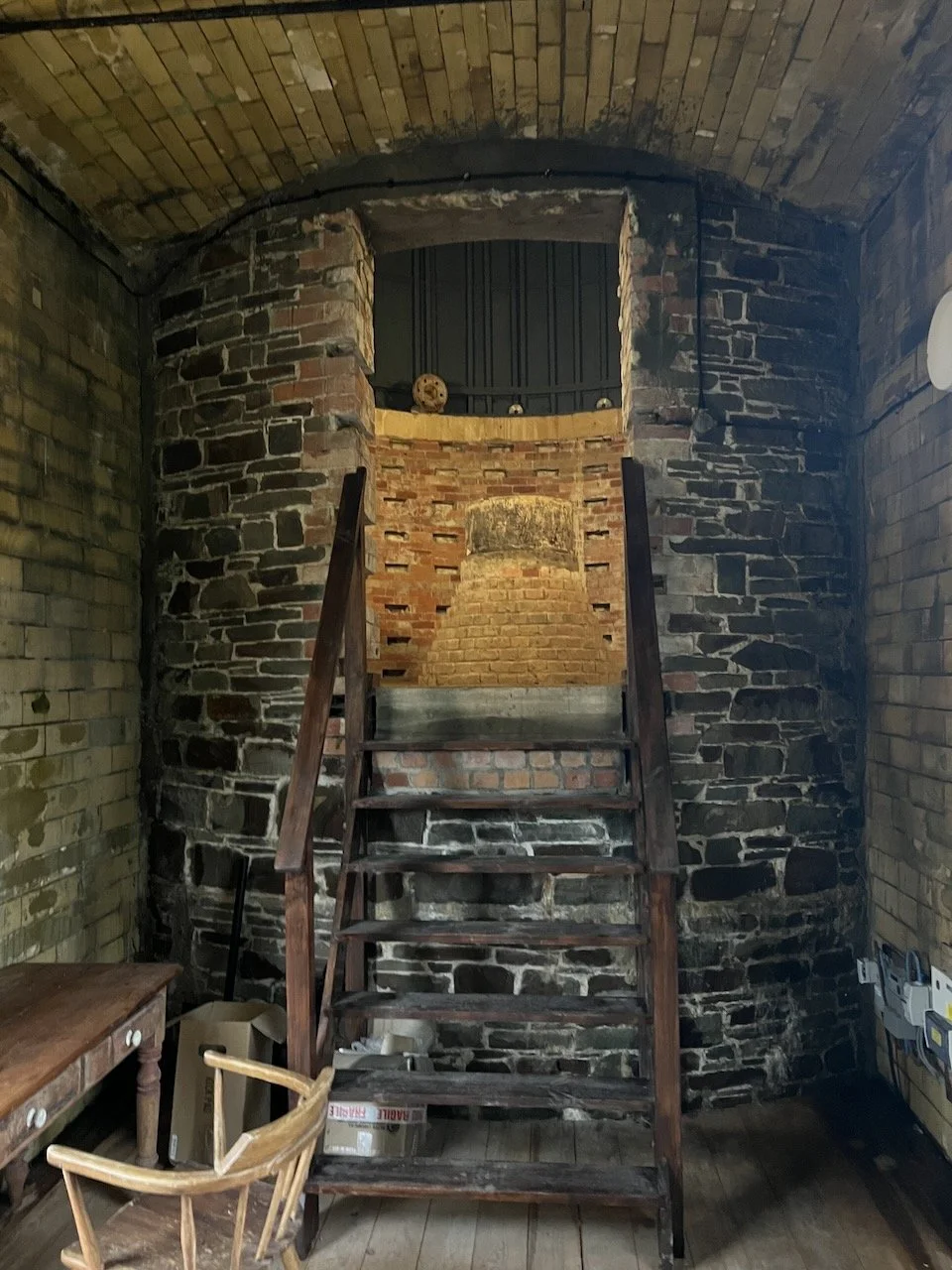
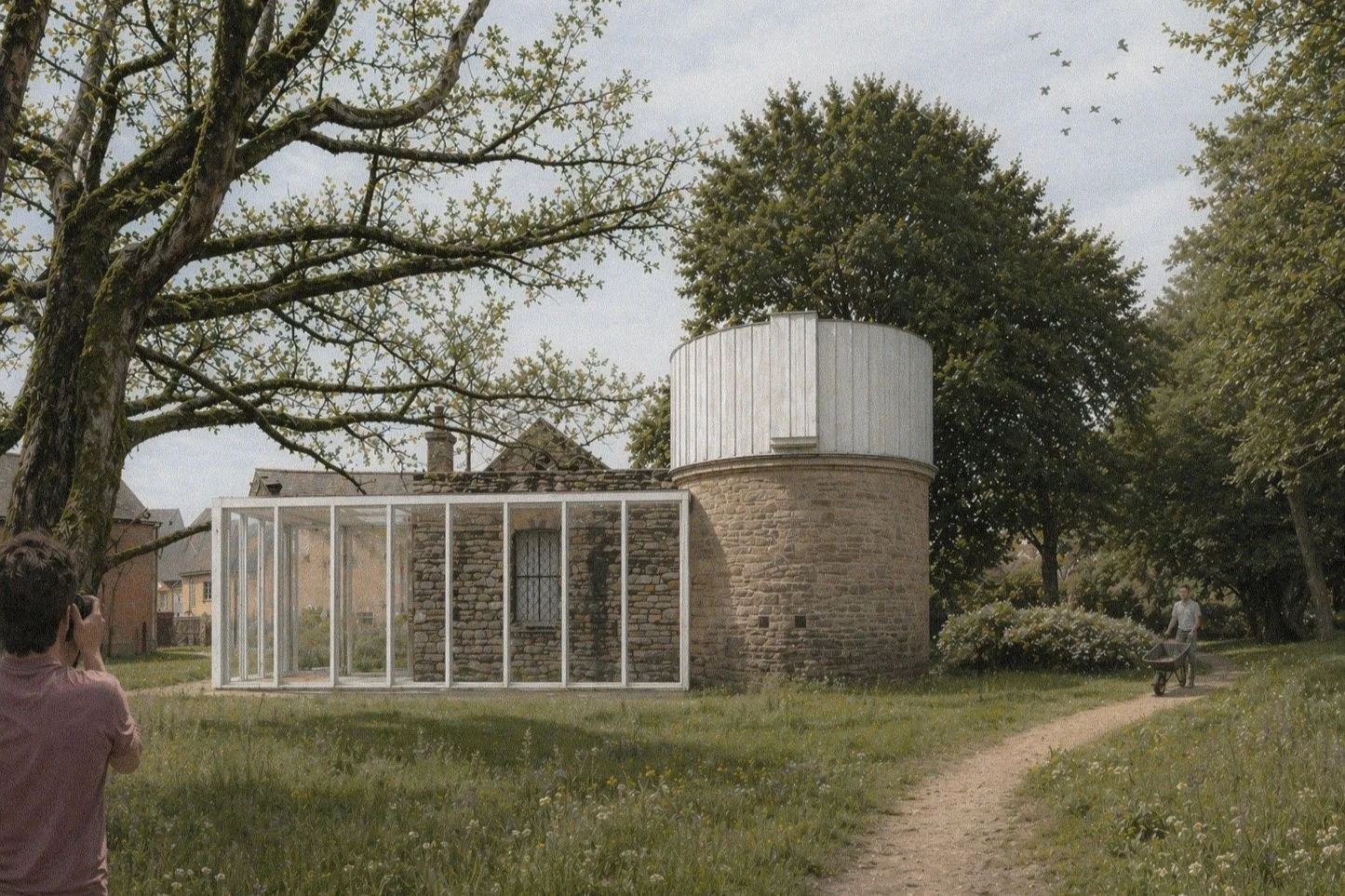
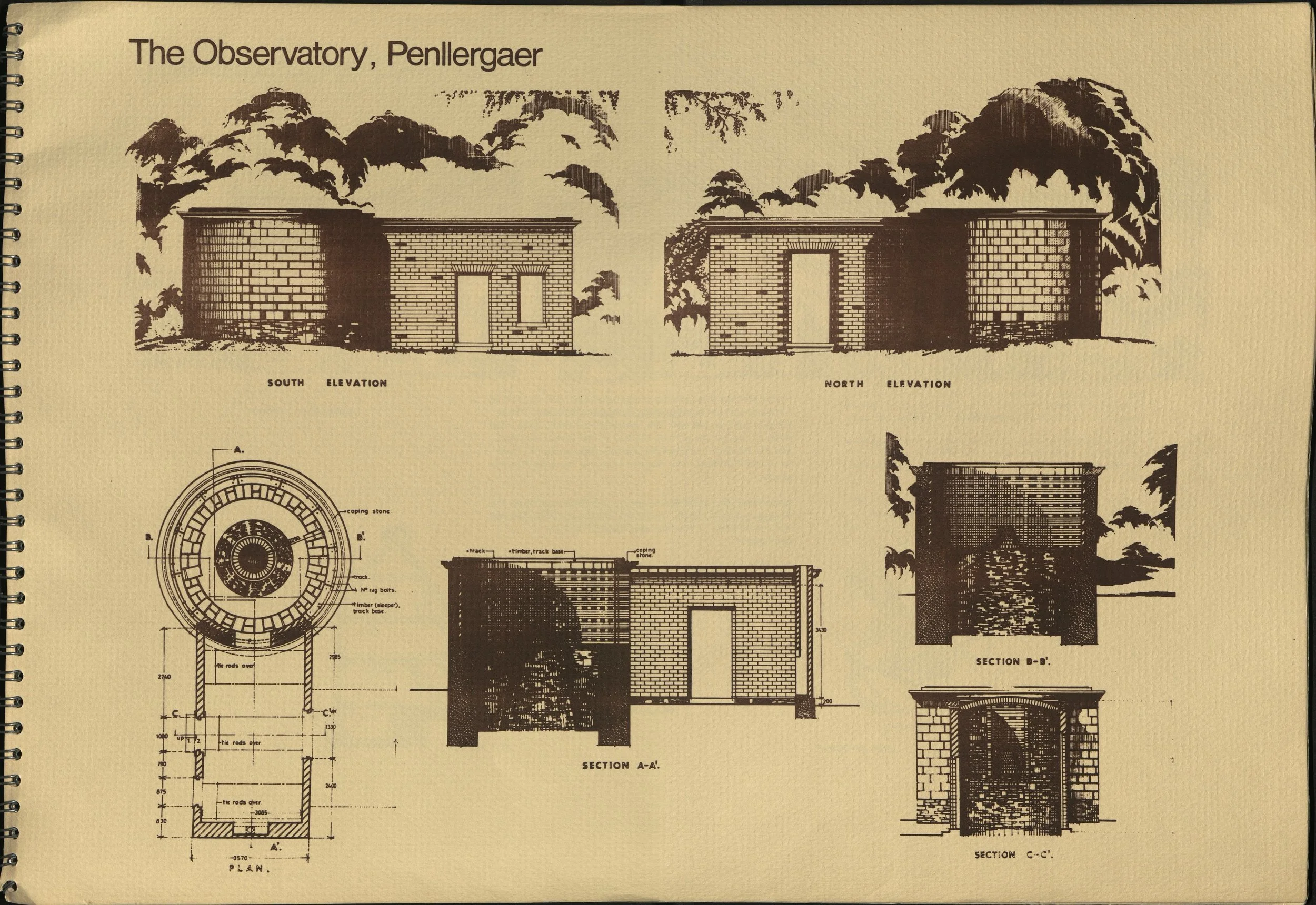
We worked with Frans Nicholas Architects and the Penllergare Woodland Trust on the sensitive refurbishment and extension of the Grade II* Listed and Scheduled Ancient Monument, the Penllergare Equatorial Observatory. The project sought to preserve this nationally significant heritage asset while adapting it to provide a small educational planetarium for public use. Constructed in 1851 by the pioneering scientist, photographer and astronomer John Dillwyn Llewelyn as a gift for his daughter Thereza, the observatory formed part of the wider Penllergare Estate, now a publicly accessible woodland managed by the Penllergare Woodland Trust. John and Thereza shared a passion for astronomy, art and early photography, and together they produced one of the earliest successful photographs of the Moon, securing the observatory's place in the history of science and photography. The design proposes a lightweight wraparound extension constructed from recycled steel and glass, carefully conceived to protect the fragile hollow-brick laboratory building while remaining clearly distinguishable from the historic fabric.
-
_Refurbishment and extension to scheduled ancient Monument
_New Planetarium space to be used for educational purposes
_New meadow landscaping to surrounding village green
_New route created connecting Penllergare woodland to Observatory
_Detailed repair of existing heritage brick and stone work
-
The historic observatory sits within a village green that is now enclosed by a recently completed housing development. Over time, the building had become physically and socially disconnected from both the wider Penllergare Estate, of which it was once an integral part, and the new residential community that had grown around it. As a result, the observatory no longer served a meaningful purpose for local residents or visitors. A key objective of the project was therefore to re-establish these lost connections. By carefully refurbishing and extending the Scheduled Ancient Monument to accommodate a small educational planetarium, the scheme reconnects the observatory with its historic landscape while creating a new community asset for the surrounding neighbourhood.
-
Extensive consultation was undertaken with local residents to better understand how the village green was used and how the observatory could once again contribute to community life. Feedback overwhelmingly supported bringing the long-disused building back into active use, with residents welcoming the opportunity to create a new destination that would enhance the green while respecting its historic character. The design process was also informed by close collaboration with planetarium specialists and Dark Sky Wales, the organisation responsible for operating the facility once complete. Their input helped shape the technical requirements of the new planetarium, ensuring the intervention would provide a high-quality educational resource while remaining sensitive to the significance of the Scheduled Ancient Monument.
-
The original brief called for the restoration and refurbishment of the existing observatory. However, detailed analysis of the building's condition revealed that a strategy of patch repair and selective replacement of the historic fabric alone would not provide a sustainable long-term solution. Instead, the project identified an opportunity to introduce a carefully considered extension that would both protect the fragile historic structure and secure its future use. The extension was conceived as a complementary intervention that safeguards the Scheduled Ancient Monument while providing the additional accommodation required for a small planetarium, education facilities and community use. By separating the new programme from the historic fabric, the scheme minimises intervention to the original building, enhances its long-term resilience, and transforms the observatory into a viable public asset for future generations.
-
Throughout the project, an open and collaborative dialogue between CADW, the client and the design team was fundamental to shaping the proposals. This ongoing engagement established a shared vision for the observatory: to create an accessible, safe and welcoming community resource while maintaining a deep respect for its significance as a Scheduled Ancient Monument and an important heritage asset.
-
Schedule Ancient Monument Consent Application
Full Planning Application
Refurbishment and extension strategy
Consultant Coordination
Detailed drawings of connection between new and old structure